
AI-mediated communication between health care providers, facilitators and patients with cognitive linguistics challenges
36th International Conference on Information Modelling and Knowledge Bases
This stage seems to be most interesting one to almost all of the data scientists. Many people call it “a stage where magic happens”. But remember magic can happen only if you have correct props and technique. In terms of data science “Data” is that prop and data preparation is that technique.

36th International Conference on Information Modelling and Knowledge Bases

An evaluation of the responsibility of generative AI models presents unique challenges that require holistic and practical solutions. This paper introduces an enhanced version of the VERIFAI framework, which extends beyond classification models to assess generative language models as well… Read More »Towards Responsibility Evaluation of Generative Language Models


Bis 2025 werden 41,6 Milliarden IoT-Geräte erwartet. Dadurch wächst die Menge an kontinuierlich generierten Daten rasant. Klassische maschinelle Lernverfahren, die auf statischen Datensätzen trainiert werden, sind nicht in der Lage, sich kontinuierlich an dynamische Umgebungen anzupassen. Problematisch ist dabei der… Read More »Adaptives maschinelles Lernen mit Mixture of Experts

Ziel dieser Arbeit ist die Entwicklung und Validierung eines automatisierten Prognosemodells für Gepäckmengen am Hamburger Flughafen unter Verwendung der Low-Code AutoML-Bibliothek PyCaret. Durch die Automatisierung signifikanter Phasen des Machine-Learning-Lebenszyklus konnten präzise Vorhersagen für Gepäckstücke pro Flug innerhalb und außerhalb der… Read More »Automatisierte prädiktive Analytik in der Gepäckabfertigung
Our research endeavors to advance the concept of responsible artificial intelligence (AI), a topic of increasing importance within EU policy discussions. The EU has recently issued several publications emphasizing the necessity of trust in AI, underscoring the dual nature of… Read More »Responsible Artificial Intelligence: A Structured Literature Review
The growing integration of artificial intelligence (AI) in diverse sectors underscores the need for comprehensive and standardized approaches to ensure AI responsibility. However, the absence of a holistic framework to evaluate the fairness, privacy-preserving, secure, explainable, and human-centered facets of… Read More »Bridging the Gap between Theory and Practice: Towards Responsible AI Evaluation
This work represents the first step towards a unified framework for evaluating an AI system’s responsibility by building a prototype application.The python based web-application uses several libraries for testing the fairness, robustness, privacy, and explainability of a machine-learning model as… Read More »VERIFAI – A Step Towards Evaluating the Responsibility of AI-Systems
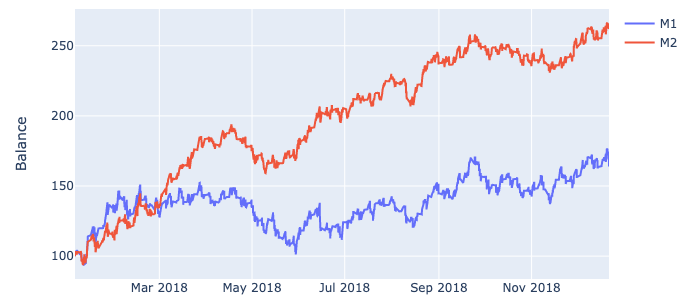

This paper presents a reinforcement learning approach for foreign exchange trading. Inspired by technical analysis methods, this approach makes use of technical indicators by encoding them into Gramian Angular Fields and searches for patterns that indicate price movements using convolutional… Read More »Scalp the Foreign Exchange Market with Deep Reinforcement Learning

Deep learning methods have gained attention in predictive process mining tasks. The most popular architectures include Recurrent Neural Networks and Convolutional Neural Networks. Inspired by the fact that Graph Neural Networks can operate directly on graph data, this work proposes… Read More »Predictive Business Process Monitoring using Graph Neural Networks
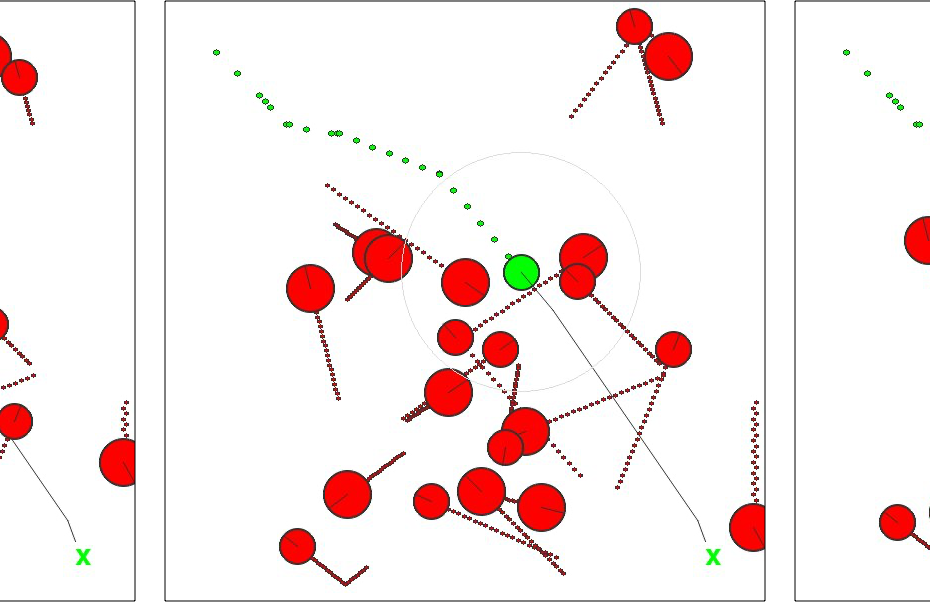
Mobile robot path planning is one of the most essential problems in robotics. This work proposes a novel PSO-based method for mobile robot local path planning in dynamic unknown environments. Using this method, the robot is able to accelerate or… Read More »Mobile Robot Path Planning in Dynamic Unknown Environments using Particle Swarm Optimization